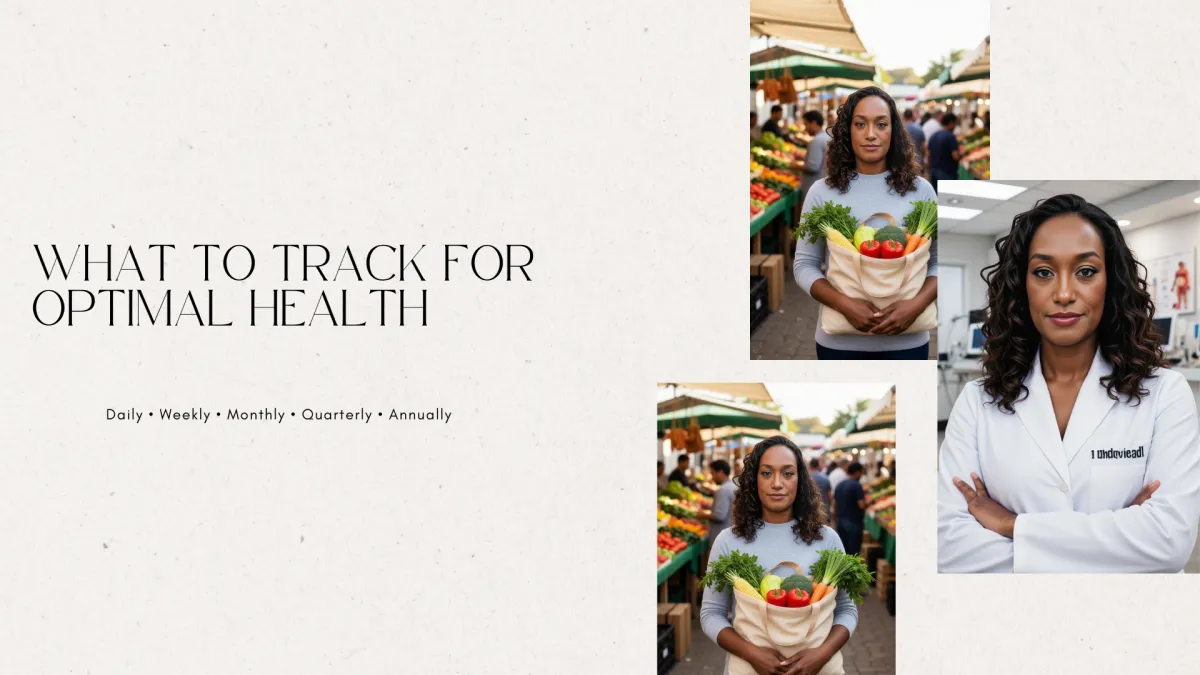
What to Track for Optimal Health: A Calm, Practical Guide for Adults 35–65

Most people are taught to think about their health once a year.
You schedule a physical, get labs done, and wait to hear back. If no one calls, you assume everything is fine.
But your body doesn’t operate on an annual schedule.
In Episode 12 of What The Health: Confessions of a Black Nurse, we talk about a more realistic — and more empowering — way to think about health tracking: paying attention across different timeframes.
This approach isn’t about becoming hyper-focused or anxious. It’s about learning how to notice patterns over time so you can make informed, calm decisions about your health.
Why Tracking by Timeframe Matters
By the time something shows up clearly on labs, subtle changes have often been happening for months or even years.
Daily stress, sleep quality, recovery, and energy don’t always show up in a single test — but they matter.
Tracking by timeframe helps you:
Catch slow shifts early
Separate normal fluctuations from meaningful patterns
Have better conversations with your healthcare provider
Stay proactive without panic
This doesn’t mean something is wrong. It means you’re paying attention.
What to Track — Without Overthinking It
Daily: Notice how you feel Energy levels, sleep quality, stress perception, and hydration awareness give insight into how your body is responding day to day.
Weekly: Look for patterns Weekly reflection helps you zoom out and notice trends in energy, digestion, stress recovery, and movement consistency.
Monthly: Watch for slow shifts Monthly check-ins help you notice gradual changes that are easy to miss — especially in midlife.
Quarterly: Think strategically Quarterly reflection supports long-term sustainability, stress balance, and lifestyle alignment.
Annually: See the big picture Annual labs and screenings still matter — but they’re most useful when informed by the rest of the year.
Using Trackers Without Anxiety
One of the most important messages in this episode is that tracking is about awareness, not perfection.
You don’t need to track everything. You don’t need to track forever. And you don’t need a wearable device to be healthy.
If you choose to use trackers or wearables, the goal is to notice trends over time — not to react to every number.
Download the Tools from This Episode
To support this episode, we created several simple, non-diagnostic tools you can download and use at your own pace:
What to Track by Timeframe Guide – a one-page overview of what to notice daily through annually
Simple Weekly Reflection Tracker – a quick weekly check-in you can complete in under five minutes
Provider Conversation Cheat Sheet – language and prompts to help you discuss patterns with your healthcare provider
Wearables & Mindset Mini-Guide – guidance on using wearable data without stress or obsession (available inside Vitality Catalyst)
These tools are optional. They’re meant to support awareness — not create pressure.
Final Thought
Paying attention to your health doesn’t mean something is wrong.
It means you’re taking a long-term, thoughtful approach to caring for your body — one grounded in curiosity, not fear.
If you’d like deeper guidance and community support, you can learn more about Vitality Catalyst in the links below. And if you’re interested in becoming a patient in the practice, you’ll also find information on how to apply.
As always, thank you for listening, sharing, and being part of this conversation.
Medical Disclaimer: This content is for educational and entertainment purposes only and does not constitute medical advice. It is not intended to diagnose, treat, cure, or prevent any condition. Always consult your personal healthcare provider regarding your health.


